Asian Carp an Invited Invader
Imagine a young boy and his grandfather cruising down the Illinois River on their way to their favorite fishing hole. As they zip along in their fourteen feet long john boat, the boat motor stirs up the water behind them. It is just another beautiful day with the early morning sun glistening on the muddy water, and then suddenly the water surface explodes in a white furry of splashes and sprays. The young boy and his grandfather can only look on in astonishment as they realize that this scene is actually being caused by jumping fish. These “flying” fish are Asian carp, an invasive species of fish that now call the river home. These invasive fish currently make up ninety five percent of the fish population in the Mississippi River (Flying Asian Carp). Though they have become very prevalent in the last decade, the Asian carp are not very marketable in the United States because they are considered too boney for many American consumers. As these invaders spread further and further north up the Illinois and Mississippi Rivers, they continue to demolish the food supply and overtake habitats that native species of fish and other invertebrates depend on for both living and spawning. This competition with the indigenous aquatic populations for food and space has made these invasive carp a very serious problem in Illinois waterways. These highly destructive species of carp are dealing devastating blows to Illinois fish populations and also to the revenue that commercial and recreational fisherman as well as recreational boaters bring to the state every year. There should be more research and action, done by public and private organizations, to track and prevent the spread of these fish into further rivers and waterways.
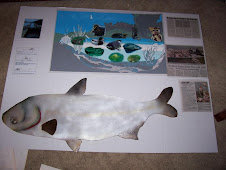
The term Asian carp actually includes five different species of carp. These species include common carp, grass carp, bighead, silver, and black carp. These carp are very prolific creatures that are able to grow to fifty pounds very rapidly and then continue to grow well over one hundred pounds in the best water conditions. Of the five species of Asian carp that can be found in the Illinois, Missouri, and Mississippi River systems, the common and grass carp were introduced for food marketing in the United States in the 1800’s, and are still being sold for consumption today under names such as buffalo, noble fish, speckled amur, and lake fish (AIS). The remaining three species are now the cause of habitat and spawning water destruction (UMESC).
These Asian carp originally began their extreme journey to Illinois and Mississippi from China. In 1972, the Asian carp were imported to Arkansas with a harmless goal in mind. These fish were initially intended to clean the floating algae that tend to collect in aquaculture farms. An aquaculture farm is a farm that produces market fish, shellfish, or any other aquatic animal intended for market (Aquaculture Wiki). The algae and other debris that can form on the surface and floor of aquaculture ponds can reduce oxygen levels and also make water clarity an issue for market fish, such as catfish (Southern Regional Aquaculture Center). The carp clean the algae from the pond because the floating debris is the carp’s food source in the wild.
Though the use of Asian carp to clean aquaculture ponds can be very profitable for the farm, the fish can escape from the farm’s boundaries and begin to spread into native waters. This was precisely the case in the United States. In the early 1990’s several large rain systems began to cause the rivers in the Midwestern United States to rise out of their banks and overflow into streams and ponds (UMESC). Some of these ponds were aquaculture farms that had introduced Asian carp for their intended purpose, but when the ponds began to swell, the carp escaped and made their way up the flooding streams and into river systems. Once in the rivers, these fish that require moving water for successful breeding, thrived in their new found home (Asian Carp P.J. Perea).
As the Asian carp began to stake out home ranges in the Mississippi River System, the only obstacles that prohibited their spread further and further north up the river were actually man-made locks and dams (USGS). When the carp reached the first lock in their path, they immediately began to be accidentally pass through, just as they had been released from the farms. As the locks would open to allow watercraft through, the Asian carp were able to simply swim in alongside the boat or in some cases be forced into the lock by water currents and then the doors would close behind them. The doors would then open in the forward end of the lock and the watercraft along with the Asian carp would move out into new waters. Though the carp could easily begin to pass through lock systems, they had to have a helping hand to climb over the towering dams on the great river. As the carp reached the dams, their advance up the river came to a halt in front of the massive concrete walls until humans intervened and once again accidentally gave them a helping hand. Fisherman that often fish on the upper side of the dams will often go to the lower side of a dam and cast out bait nets because the swirling water at the bottom of a dam is the perfect condition for small fish. In these nets the fisherman catch bait fish, but along with the bait fish the fisherman also haul up juvenile Asian carp that are often easily mistaken for the bait fish. Once these fisherman catch their bait, they take it back to the waters above the dam and use what they want of it, which presents no real threat of the spreading of Asian carp, but it is what the fisherman do with the left over bait that is a problem. Often fisherman will simply dispose of the remainder of the bait fish he or she has caught by dumping the still live fish overboard (Oklahoma State University). This accidental introduction of the Asian carp into waters that would have remained inaccessible to them is known as “bait cup spreading” (Oklahoma State University). This process has now become illegal in many areas.
When the carp began to make their way over the most solid and permanent structures on the many rivers that they call home, the effects that these fish were having on native populations became apparent. Asian carp expand their home range very quickly which can lead to less and less habitat for native species of mussels and other invertebrates (US Fish and Wildlife). Though all of the species of carp that are incorporated in the term Asian carp have disastrous results for aquatic populations, each specific species has a unique effect on a waterway. Grass and Common carp eat primarily aquatic plants that grow on the bottom of a waterway, therefore when these two species of carp move into an area, they immediately start to eliminate massive areas of aquatic plants that provide other species food. These large plant covered areas are also the native spawning ground for many native fish, and if the areas were eliminated, there would be a large drop in native species populations. The species known as Black carp has been known to feed on snails, mussels, small invertebrates, and other crustaceans that have made the rivers their homes for hundreds of years. In recent years the invading Black carp have begun to make these already rare creatures even more rare through over eating in some areas.
The voracious appetite of these fish for zooplankton can cause catastrophic results if a population of Asian carp moves into a new area. In Illinois aquatic ecosystems, the basis of most life relies on this zooplankton. All aquatic animals need this plankton to provide a solid foundation for the food web. When native fish spawn their larva must have zooplankton to eat, and these young larva are a food source for larger fish and then so on and so forth. Mark Pegg a fisheries biologist for the Illinois Natural History Survey said, “Larval fish must compete with these filter-feeding carp, and they also risk being eaten themselves.” Because Asian carp are filter feeders (an aquatic animal that feeds on particles or small organisms strained out of water by circulating them through its system) (Dictionary.Com), they rake over the plankton and often eat the larval fish that find themselves in the carp’s feeding frenzy (Flying Asian Carp).
Not only do Asian carp eat everything that native fish populations need for survival, they also takeover these native fish’s spawning areas. The indigenous fish in the Illinois and Mississippi spawn in the grassy backwaters because they provide safety from some of the predatory fish that feed on the eggs of other fish. When invasive carp move into a backwater area they outnumber the preexisting fish populations and begin to make it their own spawning grounds. A recent survey concerning the fish populations of Missouri River backwaters showed that 90% of all of the fish in the studied backwaters were some species of carp (Asian Carp P.J. Perea). When native fish populations are denied areas in which to spawn, there are no eggs laid, and when there are no eggs, there are no young fish produced, and over time this will cause a sever decrease in overall population numbers.
As the invasive Asian carp continue their fast paced swim and jump up the river systems, they are being documented closer and closer to the Chicago shipping and sanitation canals. If the invasive carp entered the canals, they would only have the same effects within the canals as they did in the rivers. Though the migration of the Asian carp to the Chicago canals would be devastating to native fish populations that call the canals home, the real threat if the carp made it that far north would be to the Great Lakes. The Great Lakes and the Mississippi River are directly connected by the shipping and sanitation canals. This would allow the invaders to enter the lakes with ease. If the Asian carp were to find their way into the lakes, it would be one of the greatest ecological and commercial disasters of our time.
The Great Lakes are home to fisheries that produce many different species of native and non-native fish including species such as; walleye, salmon, white fish, and lake trout (GLIN). At the present time, Asian carp have been documented to be within forty miles of the Great Lakes and the fisheries that provide fish to organizations that release them, and to markets that sell these fish all across the country. If the invasive carp were to reach the lakes, they would have devastating impact on these fisheries because their extreme appetite would cause them to eat the food upon which the fisheries depend on. Because they are capable of reaching enormous sizes, the carp would also simply overrun the fisheries and would soon choke off the native fish that are contained to the fisheries borders (Great Lakes Fishery Commission).
Furthermore, commercial and sport fishing in the Great Lakes collectively bring in revenue of four million dollars annually, and if the fish were to make the journey to the lakes, this maritime economy would see a drastic downfall. The fish have begun to damage commercial fishing gear such as large nets which often become tangled in large swarms of silver and bighead carp on the Mississippi and Illinois Rivers. These silver carp are also becoming a problem because of their instinct to jump out of the water when threatened by predators. When sport boaters use their boats on the rivers, the boat motor send vibrations through the water and cause the carp to jump from the muddy water and fly through the air. When the carp jump, they often hit people in midflight causing bruising and in some cases broken bones. They are also reported to have damaged boats by hitting and breaking windshields, lights, and anything else that the flying menaces can slam into or shatter (IPO).
The Asian carp’s destructive nature has caused the fish to become a nuisance to both native fish populations and the river ecosystems as well as to river commercial fisherman and recreational boaters alike. Therefore, there have been several attempts at stopping the carp from reaching the Great Lakes. Though the overall thought of halting these devastating animals is one of great hope and need, the only way to completely stop the spread further north and then into the Great Lakes is to eliminate the invader completely (Nature Out of Place, Invasion of the Global Age). The most effective way of stopping an invasive species from over taking further territory is to eradicate the species causing the problem. Although the most effective method is to eliminate the species, another option is to cut the species off from the remainder of the ecosystem and keep the problematic species contained within the new area (Nature Out of Place, Invasion of the Global Age).
In the case of the Asian carp invasion, one of the most successful methods of preventing the spread of the carp is an electrified barrier that is in place to stop the fish before they are able to enter the Chicago Shipping and Sanitation canal (Technovelgy). This electric barrier has two rows of electrodes that are draped into the water to form an electric fence like barrier. The electrodes send jolts of direct current through the water to turn any Asian carp, that may make it that far north, away from the canal. The barrier is now running twenty-four hours a day at a rate of two volts every six and one half milliseconds because there have been documented sightings of the carp as close as five miles from the barrier (Flying Asian Carp). There have also now been tests that show that the carp may have passed through the barrier and are now being held back only by a navigational lock (JJC 10/21/09). If the carp were to pass through the barrier and enter the canal, there is a more abrasive option that can be taken to stop the fish in the tracks. Poison will kill the fish and freeze their advancement immediately. There is currently a plan in place to use poison in the Sanitary and Shipping Canal in early December of 2010 in an attempt to stop the carp (JJC 10/15/09). Though poisoning the carp would halt their advancement, this option is not favored because the poison kills all aquatic creatures that come in contact with it. This fact makes it a last resort for stopping the invaders before they reach the lakes (JJC 10/15/09).
Another idea that has been presented for dealing with the carp invasion is the simple thought that the carp will be self limiting. The river systems that the carp now inhabit can only support such large quantities of the carp for so long before food and space becomes too scarce, and they begin to die off (Columbian Missurian). This die off would reduce numbers, but it would most likely be only the weakest of the carp population that would die off, which would lead to continued problems with the carp. This process would also take some time before the first die off would occur, allowing the carp time to enter into the Great Lakes and reek havoc on the area (Columbian Missurian).
An invasive species can turn an ecosystem completely upside down. In Illinois the Asian carp invasion has done just that. Aquatic environments that have been stable and productive for over one hundred years have now been introduced to these invasive species of carp by humans that found the now disastrous carp to be a great resource. The carp that were first brought here for aquaculture farming are now destroying native fish population’s food sources and spawning grounds. These maritime bullies swam and jumped their way up Illinois waterways and are now knocking on the Great Lakes doors. If the carp were to enter the lake, it would cause the greatest ecological disaster of our time. These invasive fish have become a terrible nuisance and a threat to the Illinois waterways and the native species that inhabit them. If they are allowed to continue, there will be greater decrease in native fish populations as well as annual profits brought in by commercial fisherman and recreational boaters. Therefore, state and private organizations should devote more time and resources into the monitoring and prevention of the spread of invasive Asian carp.
Monday, March 29, 2010

Works Cited
“(AIS) Aquatic Invasive Species.” Bighead Carp. N.p., Apr. 2009. Web. 15 Dec. 2009..
“Aqualculture.” Wikipedia. N.p., n.d. Web. 25 Nov. 2009..
“Asian carp facing starvation, reproductive problems.” Asian Carp Facing starvation, reproductive problems. N.p., n.d. Web. 16 Oct. 2009.
“Asian carp may have breached electronic barrier.” Jacksonville Journal Courier 21 Nov. 2009: 2. Print.
“Dictionary.com.” Filter Feeder. N.p., n.d. Web. 15 Dec. 2009..
“Flying Asian Carp Inching Their Way Closer to the Great Lakes.” Michigan State University Libraries. N.p., n.d. Web. 25 Nov. 2009..
“GLIN.” Fish and Fisheries of the Great Lakes Region. N.p., 18 June 2009. Web. 15 Dec. 2009..
“Great Lakes Fishery Commission.” Exotic Species- Asian Carp. N.p., n.d. Web. 15 Dec. 2009..
Hawthorne, Michael. “Asian carp to be poisone in Illinois.” Jacksonville Journal Courier 15 Nov. 2009: 3. Print.
“Invasive Fish Survey Resumes in Illinois Waterway: Boater safety around electrical barrier a priority.” US Fish & Wildlife Service. N.p., n.d. Web. 16 Oct. 2009..
“IPO.” Asian Carp Invasion. N.p., n.d. Web. 16 Dec. 2009..
Koel, Todd M., Kevin S. Irons, and Eric Ratcliff. “Asian Carp Invasion of the Upper Mississippi River System.” USGS. N.p., n.d. Web. 27 Oct. 2009..
“Oklahoma State University.” Silver Carp. N.p., n.d. Web. 15 Dec. 2009..
Perea, P. J. “Asian Carp Invasion.” IPO. N.p., n.d. Web. 27 Oct. 2009..
Stone, Nathan, et al. “Southern Regional Aquaculture Center.” Bighead Carp. N.p., Sept. 2000. Web. 15 Dec. 2009..
“Technovelgy.” Electrical Barrier To Keep Asian Carp Out Of Great Lakes. N.p., n.d. Web. 16 Dec. 2009..
“Us Fish and Wildlife Service.” Asian Carp-Aquatic Invasive Species. N.p., Nov. 2004. Web. 15 Dec. 2009..
Van Driesche, Jason, and Roy Van Driesche. Nature Out of Place Biological Invasions in the Global Age. N.p.: Library of Congress Cataloging-in-Publications, 2000. 27. Print.
“(AIS) Aquatic Invasive Species.” Bighead Carp. N.p., Apr. 2009. Web. 15 Dec. 2009.
“Aqualculture.” Wikipedia. N.p., n.d. Web. 25 Nov. 2009.
“Asian carp facing starvation, reproductive problems.” Asian Carp Facing starvation, reproductive problems. N.p., n.d. Web. 16 Oct. 2009.
“Asian carp may have breached electronic barrier.” Jacksonville Journal Courier 21 Nov. 2009: 2. Print.
“Dictionary.com.” Filter Feeder. N.p., n.d. Web. 15 Dec. 2009.
“Flying Asian Carp Inching Their Way Closer to the Great Lakes.” Michigan State University Libraries. N.p., n.d. Web. 25 Nov. 2009.
“GLIN.” Fish and Fisheries of the Great Lakes Region. N.p., 18 June 2009. Web. 15 Dec. 2009.
“Great Lakes Fishery Commission.” Exotic Species- Asian Carp. N.p., n.d. Web. 15 Dec. 2009.
Hawthorne, Michael. “Asian carp to be poisone in Illinois.” Jacksonville Journal Courier 15 Nov. 2009: 3. Print.
“Invasive Fish Survey Resumes in Illinois Waterway: Boater safety around electrical barrier a priority.” US Fish & Wildlife Service. N.p., n.d. Web. 16 Oct. 2009.
“IPO.” Asian Carp Invasion. N.p., n.d. Web. 16 Dec. 2009.
Koel, Todd M., Kevin S. Irons, and Eric Ratcliff. “Asian Carp Invasion of the Upper Mississippi River System.” USGS. N.p., n.d. Web. 27 Oct. 2009.
“Oklahoma State University.” Silver Carp. N.p., n.d. Web. 15 Dec. 2009.
Perea, P. J. “Asian Carp Invasion.” IPO. N.p., n.d. Web. 27 Oct. 2009.
Stone, Nathan, et al. “Southern Regional Aquaculture Center.” Bighead Carp. N.p., Sept. 2000. Web. 15 Dec. 2009.
“Technovelgy.” Electrical Barrier To Keep Asian Carp Out Of Great Lakes. N.p., n.d. Web. 16 Dec. 2009.
“Us Fish and Wildlife Service.” Asian Carp-Aquatic Invasive Species. N.p., Nov. 2004. Web. 15 Dec. 2009.
Van Driesche, Jason, and Roy Van Driesche. Nature Out of Place Biological Invasions in the Global Age. N.p.: Library of Congress Cataloging-in-Publications, 2000. 27. Print.
Subscribe to:
Comments (Atom)